
 01Results-based finance
Outcome Bonds
Investors earn more as verified results arrive.
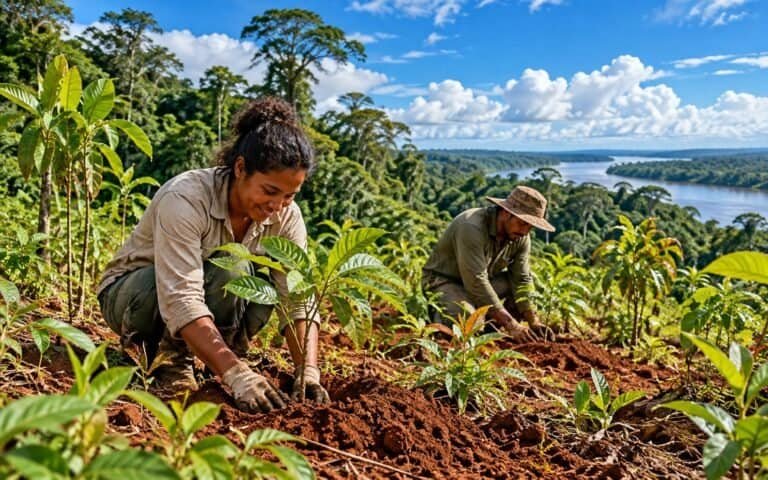
$225MAmazon reforestation, paid in carbon removedBrazil · 2024World Bank, August 202402 Capital · Capital Architecture
80 instruments that can pay for food, water, shelter, energy, education, health and livelihood.
01Results-based financeInvestors earn more as verified results arrive.
$225MAmazon reforestation, paid in carbon removedBrazil · 2024World Bank, August 2024 02Development finance
Investors fund the work; outcome payers repay them for results.
160%of the learning target, met in RajasthanIndia · 2018Educate Girls, 2018 03Inclusive capital markets
Bond money ring-fenced for homes, schools and clinics.
$400Mfor affordable homes for 24,000+ familiesEcuador · 2020Inter-American Development Bank, 2020 04Performance-linked
Miss the national climate target and the coupon rises.
$2Bthe first sovereign bond of its kindChile · 2022Ministry of Finance of Chile, 2022 05Designed by Perfect Nations
A citizen-scale share in one basic living standard.
KES 3,000to own a Kenyan government bond, by phonePrecedent: Kenya · 2017FSD Kenya, 2017 · How they workIllustrations are AI-generated; they are not photographs of the financed projects.
The toolkit
Choose a family, or search.
Every line is a real deal, dated and sourced; 79 are already in use, and Standard Tokens is designed by Perfect Nations. Open a line for how it works and its source.
Borrowing on the capital markets in the nation’s own name.
The treasury sells bonds abroad in a hard currency and pays a fixed coupon until it repays in full.
Source: London Stock Exchange, September 2026Pakistan blueprint
A first issue sets the nation’s price with global investors and opens the market for every later bond.
Sold through the central bank to local banks, pension funds and savers, often tax-free to draw demand.
Sold through banks and apps in small denominations, it turns household savings into public investment.
Source: Bureau of the Treasury, September 2026Philippines blueprint
A government bond sold in small amounts through mobile money, so ordinary savers can own a share of public finance.
The nation borrows from its own people overseas, who often accept a lower return to invest at home.
A foreign government sells yuan bonds inside China and reaches a new pool of investors.
Source: Ministry of Finance of Indonesia, July 2026Indonesia blueprint
Bonds in yen, sold in Tokyo, add Japanese investors to the nation’s lenders.
Source: International Monetary Fund, country report 2026Egypt blueprint
Investors receive returns from state assets held in trust, under Islamic law, in place of interest.
Source: Ministry of Finance of Indonesia, June 2024Indonesia blueprint
Bonds whose money is ring-fenced for a purpose.
The proceeds can be spent only on eligible social projects, reported to investors each year.
Source: Inter-American Development Bank, 2020Ecuador blueprint
The money is general budget money, but the interest rate steps up if the nation misses targets it set in advance.
The proceeds finance eligible green projects under a published framework, with allocation reports to investors.
A green bond for the sea: the proceeds fund marine protection and sustainable fisheries, here with a World Bank guarantee behind it.
A sukuk is backed by assets rather than interest; the green sukuk spends every dollar on eligible climate projects.
The proceeds are tied to both social and environmental spending under the nation’s sustainable bond framework.
Source: National Treasury of Brazil, November 2025Brazil blueprint
A city issues under its own credit, with development banks as anchor investors to draw others in.
The proceeds finance the shift of steel, chemicals and power toward net zero, under a government framework.
Shares, securitisations and hedges that bring private savings in.
A cornerstone investor commits before the public offer, giving other investors confidence in the price.
Source: Asian Development Bank, November 2025Philippines blueprint
Listing part of a state company raises money, widens ownership and brings market discipline.
A lender pools many small loans and sells securities backed by their repayments, freeing it to lend again.
Several lenders pool their issue so investors can buy at a size none could reach alone.
A national refinance company borrows on the bond market and lends long to banks for mortgages.
Source: Kenya Mortgage Refinance Company, 2022Kenya blueprint
A development bank and the central bank offer long-dated currency hedges that markets will not provide.
Source: Inter-American Development Bank, 2025Brazil blueprint
Designed by Perfect Nations: small units of finance, priced by region, each tied to one of the seven basic living standards. Pending compliance review.
Ownership capital: shares, stakes and the funds that hold them.
Oil and mineral revenue goes into ring-fenced funds for stability, future generations and infrastructure.
Source: Nigeria Sovereign Investment Authority, 2025 resultsNigeria blueprint
A blended fund pays for the government’s equity, so the nation shares in the profits without new debt.
Source: Climate Fund Managers, December 2023Namibia blueprint
Investors buy shares in a fast-growing firm and share in its upside.
Repaid after other creditors, it counts toward the bank’s capital and lifts what it can lend.
Public and climate-fund equity capitalise a bank that lends to households and firms for energy, water and resilience.
Projects repaid from their own revenues.
A company set up for one project borrows against its future sales, such as power sold under a long contract.
The partner finances, builds and operates under a long concession; the asset then passes to the state.
Senior loans fund construction; a guarantee covers the province’s equity so it keeps its stake.
Source: Asian Development Bank, August 2025Pakistan blueprint
A municipality borrows on its own balance sheet, tied to reforms that raise its revenue.
A concessional slice lowers the cost and risk, so commercial money can follow into fragile markets.
Capital that targets a measured social or environmental return.
Public and private investors commit to one fund that takes stakes in projects and reports their impact.
Source: Climate Fund Managers, September 2024Namibia blueprint
The state takes the risks private investors will not, such as currency swings, so they invest in the nation’s priorities.
A concessional window absorbs the first share of any defaults, so a bank lends to borrowers it once refused.
Lending in local currency removes exchange-rate risk from the smallest borrowers.
The bank keeps lending to small firms because part of any loss falls on the development bank.
Investment tied to lending for women, such as home loans for women buyers.
Money moves only when results are verified.
The principal is protected; the return rises with the result, here the carbon a replanted forest removes.
Investors forgo coupons; a success payment follows the measured growth of the rhino population.
Investors give up fixed interest for a share of the carbon credits that clean cookstoves generate.
Investors pay for delivery up front. A donor or foundation repays them, with a return, only once an independent evaluator verifies the results.
Investors fund a programme; the government repays them only for the outcomes it wanted, here formal jobs found and kept.
Each tranche is tied to a disbursement-linked indicator, such as pupils reaching a learning level, and is released when that result is verified.
A buyer pays a fixed price per verified unit: a tonne of emissions avoided, a child vaccinated, a home connected.
A stronger balance sheet stands behind the deal.
A development bank guarantees part of the repayments, which lowers the lenders’ risk and the borrower’s cost.
Source: African Development Bank, November 2026Tanzania blueprint
Suppliers sell on longer terms because a development bank stands behind the state company’s payments.
A development bank guarantees a commercial loan tied to reforms, cutting the rate and lengthening the term.
The guarantee lets private lenders finance public infrastructure on longer, cheaper terms than they would alone.
An insurer pays investors if a named political risk stops the project, so they invest where they otherwise would not.
Source: U.S. International Development Finance Corporation, December 2024Angola blueprint
MIGA pays the investor if the state fails to honour agreed terms, such as payments for power.
The facility guarantees up to 80 percent of each loan, capped at $1 million, through local banks.
Source: Inter-American Development Bank, July 2025Barbados blueprint
A guarantor backs a bond in local currency, so the borrower carries no exchange-rate risk.
Long-term, low-cost lending from development banks and the IMF.
The development bank pays for works and services as they are delivered, under its safeguards.
The money goes to the treasury once prior actions, such as a new law or tariff, are complete.
Concessional windows lend for decades, with long grace periods, to the nations that need it most.
Source: Asian Development Bank, September 2026Bangladesh blueprint
Each tranche follows a review of agreed targets for the budget, debt and reserves.
Source: International Monetary Fund, April 2026Ecuador blueprint
Affordable, long-maturity IMF financing that sits beside a core programme and rewards climate reforms.
Source: International Monetary Fund, January 2025DR Congo blueprint
Strong economies pre-qualify for a large line they can draw at once, and most never draw it.
Source: International Monetary Fund, November 2025Mexico blueprint
Costly debt refinanced; the savings go to people and nature.
Guarantees and insurance let the nation exchange costly bonds for a cheaper loan; the savings fund conservation for years.
Source: Ministry of Economy and Finance of Ecuador, May 2023Ecuador blueprint
Multilateral guarantees replace costly debt with cheaper debt, and the savings are spent on resilience: here water and sewerage.
Source: Inter-American Development Bank, 2024Barbados blueprint
A guaranteed commercial loan prepays costlier loans; most of the savings build secondary schools.
A World Bank guarantee stands behind a cheaper, longer loan that buys back the most expensive commercial debt.
Bondholders swap their bonds for new ones with longer maturities or less principal, so the nation can pay.
Money agreed before the storm, paid within weeks of it.
Investors earn a premium; if a storm or earthquake crosses an agreed threshold, their principal goes to the nation.
Member governments buy cover together; payouts follow measured wind, rain or quake readings, with no claims process.
Payouts follow measured rainfall, so food reaches families within weeks of a failed season.
Source: African Development Bank, August 2024Malawi blueprint
The loan is agreed in calm times and drawn the moment a disaster is declared.
A clause in the bond defers payments after a severe hurricane, flood or epidemic, so the budget can go to recovery.
Short-term money that keeps food, fuel and exports moving.
A trade finance lender pays for a state buyer’s imports, repaid within months from sales.
Source: Ministry of Planning, Economic Development and International Cooperation of Egypt, February 2025Egypt blueprint
The development bank covers a bank’s risk on trade deals, so small firms get credit.
The development bank takes part of the risk on a bank’s loans to crop buyers, without lending itself.
A grant-funded facility at the central bank pays for strategic imports when foreign exchange runs short.
Money that does not have to be repaid.
IDA and similar windows give grants to nations at high risk of debt distress.
Funds such as the Green Climate Fund give grants for adaptation and for cutting emissions.
A fund invests its capital and pays tropical forest nations for each hectare kept standing.
A trust fund run by a development bank pays for basic services under one set of rules.
The UN and its partners publish what a year of relief will cost, and donors fund it.
Capital already committed
404 come from multilateral institutions, 125 from private and impact investors: Capital Architecture is designed to close that gap.
Closing it brings private capital to the seven basic living standards.
Counts, never sums: the amounts are in many currencies. Every line is dated and sourced on its blueprint.
The ReDesign Studio
Each blueprint answers instrument by instrument, in sequence, with the terms attached.