
National Blueprint · One of 195

Afghanistan

A nation of 43.8 million at the crossroads of Asia, where land, snowmelt, minerals and young people remain the assets of record, whatever the government.

Perfect Nations values what Afghanistan owns and raises capital against it, through innovative financing for development (FfD) and super intelligence (SI).

Afghanistan at a glance

What we do for Afghanistan

Assets. Capital. Solutions.

Perfect Nations is a new-age sovereign advisory firm, and its clients are nations.

  1. 01AssetsThe cupFive sovereign assets, valued, from The Land to The People.
  2. 02CapitalThe laurels26 instruments and investments on record, every one sourced.
  3. 03SolutionsThe seven starsSeven basic standards of living, star by star. Education is furthest from reach today.

The whole logo: a Perfect Nation, where every citizen has all seven basic standards of living, led by good governance.

01Assets · The cup · Sovereign Assets

Five assets no balance sheet counts.

Each is owned today, earns today, and can carry Afghanistan toward seven basic standards of living for every citizen.

  • 58.4%Of land in agriculture, 2024

    The Land

    Most of the land is farmed or grazed, while 27.8% of people are undernourished.

  • 1,162 m³Renewable fresh water per person, 2022

    The Snowmelt

    The mountains feed the rivers, and the rivers feed the fields.

  • 20 areasMineralised, delineated by the USGS, 2007

    The Minerals

    Copper and iron among known deposits; quantitative estimates exist for copper and rare earths.

  • $1.2BCASA-1000, the whole regional project

    The Corridor

    A line to carry Central Asian power across Afghanistan to Pakistan. The World Bank says work in Afghanistan resumed in December 2024.

  • 43.8mCitizens, 2025

    The People

    Young, and three in four live outside cities.

02Capital · The laurels · Capital Architecture

Finance that reaches the people directly.

Bonds, guarantees, swaps and loans that raise capital against what Afghanistan owns, every line sourced.

Capital Architecture

The record in figures

  • $1.71BUN appeal for 2026, for 17.5 million of the 21.9 million people in needUN OCHA, 2026
  • $2BClose to this in World Bank support since August 2021, routed through the ARTF and UN agenciesWorld Bank, 2026
  • $1.568BAsian Development Bank grants committed since 2022, delivered through the United NationsADB, 2026
  • $1.2BCASA-1000, the regional power line from Central Asia to Pakistan; work resumed in Afghanistan in December 2024World Bank, 2026
  • €162MEU humanitarian funding for Afghanistan in 2026, the initial allocationEuropean Commission, 2026

Capital already committed

  • HumanitarianAppealResponse Plan for Afghan Returnees 2026$529M

    Launched 19 May 2026 · April to December 2026 · Border response $100.7 million · Reintegration $428.5 million

    An estimated 2.7 million returnees from Iran and Pakistan

    The plan of the United Nations and NGO partners for Afghans returning from Iran and Pakistan: cash, health, nutrition, water and transport at the border, then education, health, water, livelihoods, housing and land rights where they settle. It reaches water, shelter, education, health and livelihood.

    United NationsNGO partners

    Source
  • HumanitarianAllocatedEU humanitarian aid for Afghanistan, 2026€162M

    Initial allocation for 2026 · Through UN agencies, international organisations and NGOs

    About €2.1 billion of EU humanitarian aid since 1994

    The European Commission’s humanitarian funding for Afghanistan in 2026, delivered through its partners: emergency food, health care, nutrition, education in emergencies, water, sanitation and hygiene, protection, shelter and disaster preparedness. It reaches food, water, shelter, education and health.

    European Commission

    Source
  • HumanitarianAppealHumanitarian Needs and Response Plan 2026$1.71B

    1 January to 31 December 2026

    21.9 million people in need; 17.5 million targeted

    The United Nations appeal for Afghanistan in 2026. Humanitarian funding still carries much of the basics: food, water, health care and shelter for those with the least.

    UN OCHAUN agencies and partners

    Source
  • MultilateralApprovedCommunity Resilience and Livelihoods, 2026 financing$143M

    Announced 13 February 2026 · $95 million approved by the World Bank Board · $48 million by the ARTF Steering Committee · UNOPS

    Now a $562 million project, extended to all 34 provinces

    A grant that expands community-led support for livelihoods, essential services and climate resilience: cash-for-work, social grants for households that cannot take part, home-based livelihoods for women, and the repair of water reservoirs, irrigation channels and village roads. It carries livelihood, water and food together.

    World BankAfghanistan Resilience Trust FundUNOPS

    Source
  • MultilateralGrantedADB grant for health services and farm inputs$370M

    Approved 9 October 2025 · Asian Development Fund

    Health services in 17 provinces; farm inputs for 161,000 households

    An Asian Development Fund grant that continues essential health services in 17 provinces and provides inputs for crop and livestock production to at least 161,000 households. It carries two of the seven standards: health and food.

    Asian Development Bank

    Source
  • MultilateralGrantedADB grant for food assistance and resilience$100M

    Approved 9 October 2025 · Asian Development Fund

    Hunger hotspots and communities hit by natural hazards

    Food assistance for households in hunger hotspots, community action against weather and natural hazards, and alternative livelihoods for communities hit by natural hazards, including the earthquake of 31 August 2025. It reaches food and livelihood together.

    Asian Development Bank

    Source
  • MultilateralGrantedADB emergency grant after the Nangarhar earthquake$3M

    Approved 17 September 2025 · Asia Pacific Disaster Response Fund

    Food assistance for about 60,000 people

    A fast-tracked grant for life-saving food assistance, in kind or in cash, for about 60,000 people after the earthquake that struck Nangarhar Province on 31 August 2025.

    Asian Development Bank

    Source
  • MultilateralApprovedHealth Emergency Response, Second Additional Financing$241M

    Approved 15 March 2025 · UNICEF and WFP

    Essential health services; care for mothers and newborns

    A second additional financing for the project that keeps essential health and nutrition services running in Afghanistan, with a sharper focus on the quality of care for mothers and newborns. UNICEF delivers the health services and the World Food Programme the nutrition work. It carries health and food.

    World BankUNICEFWorld Food Programme

    Source
  • MultilateralActiveEducation Emergency Response, Additional FinancingSDR 52.6M

    Grant agreements signed December 2024 · IDA grant SDR 52.6 million · ARTF grant $25 million · UNICEF

    Plus a $25 million ARTF grant; delivered by UNICEF

    Improves children’s access to learning and the conditions in the schools it supports.

    World BankUNICEF

    Source
  • MultilateralActiveCommunity Resilience and Livelihoods, Additional Financing, 2024$154M

    Approved 30 April 2024 · IDA grant $84 million · ARTF $70 million · UNOPS

    Short-term employment and essential services

    Expands the project to more areas: short-term employment, essential services such as roads, sanitation and water supply, more livelihood opportunities for women, climate resilience, and jobs and services for returning Afghan migrants.

    World BankAfghanistan Resilience Trust FundUNOPS

    Source
  • MultilateralActiveEMERGe$16M

    Announced 3 April 2024 · ARTF grant · Aga Khan Foundation and the Afghan Credit Guarantee Foundation

    Finance for micro and small enterprises

    Expands access to finance for micro and small enterprises, with a focus on women and women-led businesses.

    World Bank

    Source
  • MultilateralEndorsedARTF, Approach 3.0IDA grants

    Endorsed by the World Bank Board, 15 February 2024

    Grants through UN agencies and public international organisations

    The current framework: IDA grants for basic services and livelihoods, delivered through UN agencies and other public international organisations.

    World Bank

    Source
  • MultilateralApprovedARTF, Approach 2.0$1.3B+

    Approved 1 March 2022 · Afghanistan Resilience Trust Fund

    Delivered outside the authorities

    More than $1.3 billion from the ARTF for health, education, food security, water and livelihoods, delivered through UN agencies and other partners rather than through government.

    World BankARTF donorsUN agencies

    Source
  • MultilateralGrantedADB grants through the United Nations$405M

    Approved 25 January 2022 · Asian Development Fund

    $200m UNICEF, $135m WFP, $65m FAO, $5m UNDP

    Emergency food for more than 800,000 people, farm inputs for about 390,000 households, basic health care for about 5.3 million people, and community classes for about 264,000 children, with support for female secondary teachers and adolescent girls.

    Asian Development BankUNICEFWFPFAOUNDP

    Source
  • MultilateralActiveAfghanistan Humanitarian Trust Fund$35M

    Established by the OIC, December 2021 · Managed by the Islamic Development Bank

    Pledges of almost US$35 million by March 2024; 16 projects under way

    Grants for agriculture, education, food security, health, irrigation, hygiene and livelihoods, delivered through implementing partners. Donors include the King Salman Humanitarian Aid and Relief Centre, the Saudi Fund for Development and the Kuwait Society for Relief.

    Islamic Development BankOrganisation of Islamic Cooperation

    Source
  • MultilateralDecidedARTF, Approach 1.0$280M

    Decided 10 December 2021 · ARTF funds · $100 million UNICEF, $180 million WFP

    Transferred to UNICEF and the World Food Programme

    The first step to repurpose funds in the ARTF portfolio: $100 million to UNICEF for essential health services and $180 million to the World Food Programme for food security and nutrition operations.

    World BankUNICEFWorld Food Programme

    Source
  • MultilateralApprovedWater, Sanitation, Hygiene and Institutional Support$200M

    Approved 11 December 2020 · IDA $50 million · ARTF $150 million

    Urban water

    Improves access to and the quality of water supply in selected cities, and strengthens the capacity of the urban water utility, AUWSSC, which carries out the project.

    World Bank

    Source
  • MultilateralResumedCASA-1000 Electricity Transmission and Trade$1.2B

    Approved 27 March 2014 · Regional · Work resumed in Afghanistan, December 2024 · Full implementation expected by end 2027

    The whole regional project: Kyrgyz Republic, Tajikistan, Afghanistan, Pakistan

    A regional line to carry 1,300 megawatts of surplus summer hydropower from the Kyrgyz Republic and Tajikistan across Afghanistan to Pakistan. Work resumed in Afghanistan in December 2024, with payments to contractors made directly into offshore accounts; the World Bank expects the project to be fully implemented by the end of 2027.

    World Bank

    Source
  • MultilateralApprovedCASA-1000 Community Support Program$40M

    Approved 24 March 2014 · Trust fund TF-17012 · Revised closing date 30 June 2022

    Electricity and community infrastructure along the line

    A programme to provide access to electricity or other social and economic infrastructure services to communities along the CASA-1000 line in Afghanistan.

    World Bank

    Source
  • RegionalUnder constructionTAPI gas pipeline, Herat section153 km

    Serhetabat to Herat, 153 km · Construction began 11 September 2024

    The key Afghan section of the Turkmenistan–Afghanistan–Pakistan–India pipeline

    The key Afghan section of the Turkmenistan–Afghanistan–Pakistan–India gas pipeline, under construction from Serhetabat to Herat since 11 September 2024. It matters for energy.

    TurkmenistanAfghanistan

    Source
  • RegionalPipelineTrans-Afghan railwayFeasibility study

    Signing of a framework agreement on a joint feasibility study set for Kabul, 17 July 2025

    Uzbekistan, Afghanistan and Pakistan

    A planned rail link to connect Uzbekistan with Pakistan via Afghanistan and give Central Asian States access to Pakistani seaports. Pakistan’s Ministry of Foreign Affairs announced that its Deputy Prime Minister and Foreign Minister would visit Kabul on 17 July 2025 to sign the three countries’ Framework Agreement on Joint Feasibility Study.

    UzbekistanAfghanistanPakistan

    Source
  • BilateralSignedJapan grant for alternative livelihoods and drug treatment¥1,488M

    Grant agreement signed 3 September 2026 · JICA and UNODC · 24 months

    Badakhshan, Badghis, Helmand, Kandahar and Takhar; maximum amount

    A Japanese grant, executed by UNODC, that promotes alternative livelihoods for poppy and former poppy farmers and supports drug use prevention, treatment and recovery services in five provinces. It reaches livelihood and health.

    JICAUNODC

    Source
  • BilateralAllocatedBRIDGE, resilience and reintegration€10M

    31 August 2026 · €10 million EU allocation to a €13.5 million initiative · 36 months · Aga Khan Foundation

    Ten provinces; €3.5 million co-funded by the Aga Khan Foundation

    An EU-funded initiative to strengthen the resilience and reintegration of returnees and internally displaced persons in ten provinces, through climate-smart and regenerative agriculture, jobs and community resilience. It reaches food and livelihood.

    European UnionAga Khan Foundation

    Source
  • BilateralAllocatedEU support for returnees, through IOM€20M

    21 June 2026 · New allocation · International Organization for Migration

    High-return areas

    A European Union allocation that lets IOM scale up help for displaced people and returnees in high-return areas: protection services, health, psychosocial support, livelihoods and recovery programmes, vocational training and support for small and medium enterprises. It reaches health and livelihood.

    European UnionInternational Organization for Migration

    Source
  • BilateralSignedJapan grant for climate change adaptation in Kabul Province¥1,474M

    Grant agreement signed 8 February 2026 · JICA and UNOPS

    Climate adaptation facilities and community disaster preparedness

    A Japanese grant, executed by UNOPS, to build climate change adaptation facilities in Kabul Province and to help communities handle disaster risks linked to climate change. It matters for water, shelter and livelihood.

    JICAUNOPS

    Source
  • BilateralProvidedGerman support through the World Food Programme, UN agencies and NGOs€5.8M

    14 August 2025 · Federal Foreign Office and Federal Ministry for Economic Cooperation and Development

    Food and basic health care for returnees and border regions

    Additional German funding, on top of existing support through the United Nations, for food and life-saving basic health care, focused on returning Afghans and people in border regions, especially women and children. It carries food and health.

    German Federal Foreign OfficeFederal Ministry for Economic Cooperation and DevelopmentWorld Food Programme

    Source

The Afghanistan Newswire

The Solutions Wire
Farid Rahimi, Nation Steward of Afghanistan

Farid RahimiNation Steward of Afghanistan · SI Researcher

Already working in Afghanistan.

Independent firms and social enterprises already at work in Afghanistan, highlighted by Perfect Nations. None is a partner of Perfect Nations.

Suggest an enterprise
  • Food

    Local seed dealers

    Farmers redeem subsidised inputs by e-voucher through established networks of private seed enterprises and input dealers; certified seed with adequate fertiliser and good agronomic practices lifts wheat yields by 32.8 percent.

    FAO, 2026
  • Water

    Karez revival

    Check dams recharge the ground, and dried-up karez channels flow again in the south.

    UNDP, 2024
  • Shelter

    Turquoise Mountain

    150 historic or community buildings restored or rebuilt in old Kabul.

    Turquoise Mountain
  • Energy

    Pamir Energy

    Surplus hydropower exported across the river, reaching about 40,000 people in Afghanistan.

    AKDN, 2020
  • Education

    Begum TV

    Secondary school lessons by satellite, 21 hours a day, for girls learning at home.

    Malala Fund, 2024
  • Health

    FMIC, Kabul

    A 176-bed hospital renowned for its cardiac surgery programme; it has served over two million patients from all 34 provinces.

    AKDN, 2026
  • Livelihood

    Rumi Spice

    Afghan saffron processed by 1,900 women, paid 1.5 times a living wage.

    FoodNavigator, 2018

03Solutions · The seven stars · Perfect Capita

Perfect Afghanistan, star by star.

Perfect Capita is the yearly cost, per person, of lifting everyone above the Living Line in all seven basic living standards, set with Afghanistan in its own prices.

How Perfect Capita works
Afghanistan: the seven stars of the logo, one for each basic standard of living, rising from the cup; Food is the larger centre star. Each star carries the figure for Afghanistan.WATER31%SHELTER–ENERGY14FOOD62%EDUCATIONBarredHEALTH42LIVELIHOOD51.7%
Barred
Education · furthest from reachGirls after grade six; women at university. Over 90% of ten-year-olds cannot read.UNICEF/UNESCO, 2025

Tap a star for its figure and source.

The price of Perfect Afghanistan

To be set with Afghanistan, from its own figures and in its own prices: Perfect Capita times the people of Afghanistan, each year.

Read more

Perfect Nations estimate, from the latest published figures. Shelter has no national measure and education is barred by decree, so neither is scored. The strict measures

Strict measures. Food: share not in acute food crisis (IPC Phase 3 or above), the worst season of the year; 19.2 million people were projected in crisis in the winter of 2026–27. Water: safely managed drinking water. Shelter: no national measure of housing quality exists, so none is given. Energy: electricity used per person (5,850 GWh in 2022, divided by the World Bank population), against 1,000 kWh; about four-fifths of it is imported. Education: barred by decree for girls after grade six and for women at university; learning poverty from a 2022 analysis. Health: WHO service coverage index; the bar on women’s medical training is reported by the United Nations. Livelihood: share above the national poverty line. Each figure links to its source.

Solutions for Perfect Afghanistan

  • Solution No. 39

    Every Child Learns

    Partners finance learning through community schools, released only when children can read.

    • 01The challengeNine in ten ten-year-olds in Afghanistan cannot read a simple text.
    • 02What Perfect Nations advisesAfghanistan’s partners should finance a learning outcomes fund, delivered through UN agencies and community schools, that releases money only when independent tests show children reading, and that reaches every child it can, girls included. With super intelligence, lessons in Dari and Pashto can reach any child with a phone or a radio, and learning can be verified without a classroom.

    9 in 10ten-year-olds in Afghanistan who cannot read a simple text

    FromPreeti SinhaPresident and CEO, Perfect NationsRead the SolutionDiscuss this Solution
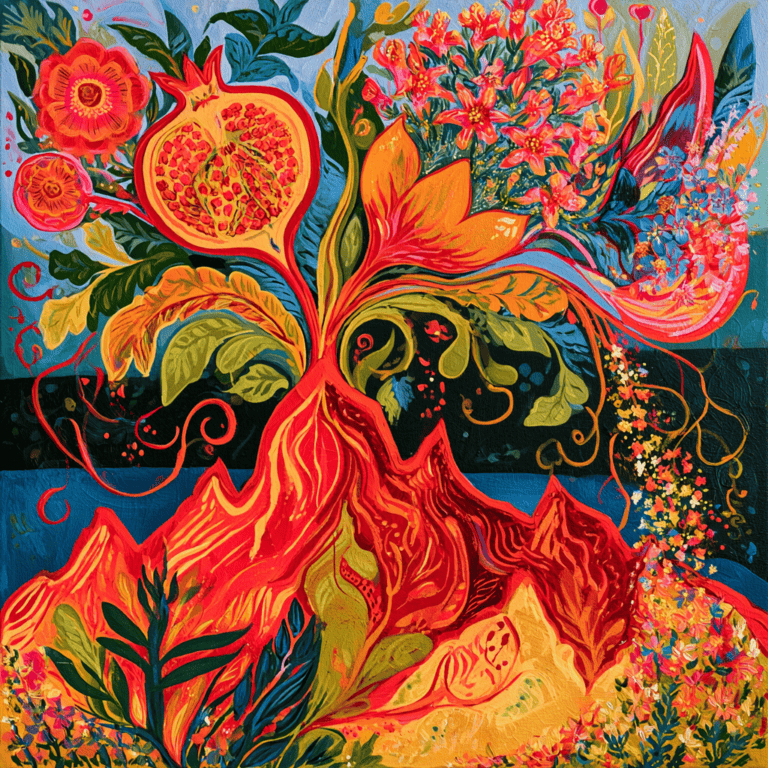
The Hindu Kush in Bloom, nation portrait of Afghanistan
The Hindu Kush in BloomNation Portrait · Art of Nations
Perfect Nations® · Letters to the NationsAfghanistan

Dear Afghanistan,

Your mountains have stood over the crossroads of Asia for thousands of years.

Read more

… Picture Perfect Afghanistan: every daughter walks to school beside her brother, the snowmelt of the Hindu Kush is stored and shared, and no Afghan falls below a decent life, because the nation has decided that none will.

“A nation is not its government. This Letter is written to the farmer, the nurse and the child, and to every daughter who wants to finish school.”

Yours in design,Preeti SinhaPresident and CEO, Perfect NationsRead the full letter

Work with us · The ReDesign Studio

The Perfect Afghanistan ReDesign Studio

One mission, three depths: the same four moves for Afghanistan, taken as far toward market as you choose.

Read more

For Afghanistan’s development partners, humanitarian agencies and investors, and for Afghans at home and abroad. Scope and fees are agreed in writing before any work begins.

  1. 01Identify the assets
  2. 02Estimate Perfect Capita
  3. 03Co-design the capital architecture
  4. 04Launch the instruments
  1. Mandate 013 hours

    The Nation Briefing

    A private session for the people who decide.

    You leave withThe gap, named and sized

    Read more
    1. 01The five sovereign assets on this page, walked through.
    2. 02The seven standards and the Gap, explained.
    3. 03The instruments that could close the Gap, shortlisted.
    4. 04The path to market, outlined.
    Request a Nation Briefing
  2. Mandate 023 days

    The Blueprint Lab

    Your team and ours, working the blueprint together.

    You leave withThe structure, drawn

    Read more
    1. 01The ledger tested against your organisation’s own data.
    2. 02Each of the seven standards costed in Afghan prices.
    3. 03One financing structure, drawn with your team.
    4. 04A term sheet and the partners to approach.
    Plan a Blueprint Lab
  3. Mandate 03End to end

    The Sovereign Mandate

    Led personally by the President and CEO.

    You leave withA structure ready for market

    Read more
    1. 01A full sovereign asset ledger, valued and verified.
    2. 02Perfect Capita set and agreed with development partners, with a monitoring plan.
    3. 03The full structure: legal form, credit enhancement, guarantees and pricing.
    4. 04Taken to investors and development partners, through to close.
    Discuss a Sovereign Mandate

Co-design it with us

Where Afghans at home and abroad, and their friends, design the nation they want to live in.

  • Writings

    Write Perfect Afghanistan into being.

    Up to 1,500 words on your vision of Perfect Afghanistan, published with your name.

    Submit your writing
  • Voices of Perfect Nations Launching soon

    The local leaders already building Perfect Afghanistan.

    Great local leaders: honest, dedicated and committed to basic standards of living for all. Every guest answers one question: “What does Afghanistan already own, and how could it pay for a decent life for every citizen?”

  • Co-designers

    Join the community.

    Everyone who shares a vision, a voice or an enterprise here becomes a Co-designer of Perfect Afghanistan. You may take part under a pen name.

    Become a Co-designer

The Afghanistan ReDesign Studio is open

Design Perfect Afghanistan with us.

Share your vision, suggest a guest, or write to us: every message receives a personal reply, and a pen name is always welcome.

Sources
  1. World Bank, World Development Indicators: population 2025 (43,844,111), land in agriculture 2024, renewable fresh water per person 2022, renewable electricity output 2021, urban share 2025.
  2. UN OCHA, Humanitarian Needs and Response Plan Afghanistan 2026: 21.9 million in need; 17.5 million targeted; USD 1.71 billion.
  3. World Bank, Afghanistan overview (updated 2026): close to USD 2 billion since August 2021; Approaches 1.0, 2.0 and 3.0; CASA-1000.
  4. Asian Development Bank, news release, 25 January 2022: USD 405 million in grants through UN agencies.
  5. Islamic Development Bank, first report on the Afghanistan Humanitarian Trust Fund, 28 April 2024.
  6. U.S. Geological Survey, Preliminary Assessment of Non-Fuel Mineral Resources of Afghanistan, 2007 (Fact Sheet 2007-3063): 20 mineralised areas.
  7. Eurasianet, July 2025, and Kun.uz, February 2026: the Trans-Afghan railway framework agreement and feasibility study.
  8. World Bank project pages for each line of Capital already committed, as linked.
  9. Coverage of the seven standards: IPC via WFP (food, 2026); WHO/UNICEF (water, 2024); UN-Habitat (shelter, 2022); UN Statistics (energy, 2022); UNICEF/UNESCO (education, 2025); WHO (health, 2023); World Bank (livelihood, 2023).
Scroll to Top